4 Axis vs 5 Axis CNC Bridge Saw: ROI Comparison for Stone Fabrication
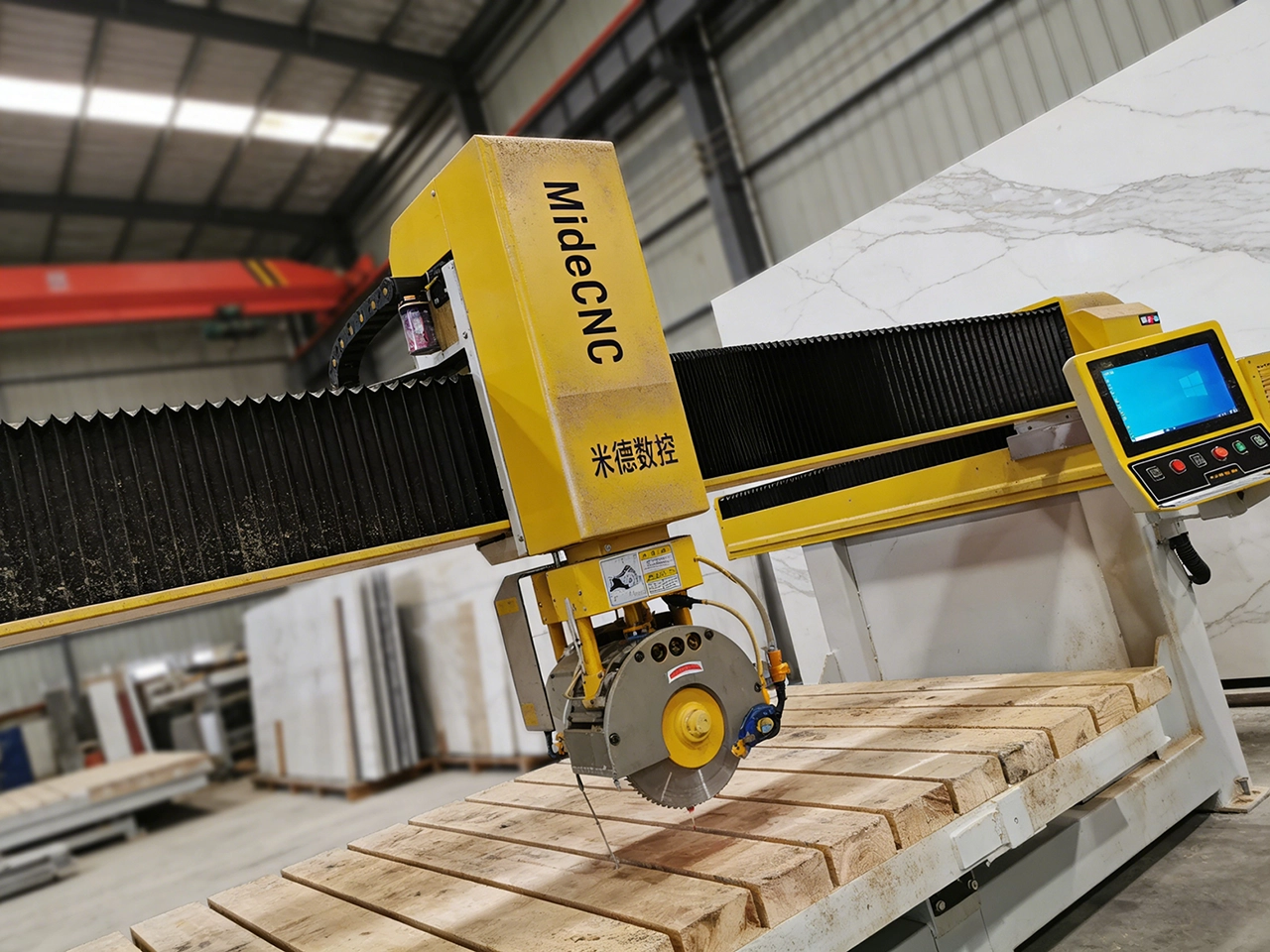
In the stone fabrication industry, choosing the right CNC Bridge Saw is not just a technical decision — it’s a financial strategy. Whether you are producing granite countertops, marble slabs, sintered stone panels, or custom architectural components, machine configuration directly affects productivity, labor cost, and long-term profitability. For stone factory investment cost planning, understanding the stone cutting machine ROI is crucial.
Among modern stone fabrication equipment solutions, the 4+1 Axis CNC Bridge Saw and the 5 Axis CNC Bridge Saw are two of the most popular options. But which one delivers better ROI (Return on Investment) for your specific production needs?
When comparing 4 axis vs 5 axis cnc machine options, factors like bridge saw machine price and CNC bridge saw payback period play a significant role in decision-making. Let’s break it down from a real B2B perspective.
CNC Bridge Saw: 4+1 Axis vs 5 Axis Core Differences
Before discussing ROI, we must clarify the structural difference between these two types of CNC bridge saws for stone fabrication.
4+1 Axis CNC Bridge Saw: Structure and Capabilities
A 4+1 axis bridge saw is an upgraded version of a traditional 4-axis machine. It allows:
- X, Y, Z linear movement
- C-axis blade rotation (0°–360°)
- A-axis tilt up to 45°
The “+1” usually refers to the blade tilting capability, enabling mitre cutting, chamfering, and simple 3D processing.
It is ideal for:
- Kitchen countertops
- Vanity tops
- Straight cutting and 45° mitre edges
- Basic sink hole processing
4+1 Axis Bridge Saws are widely used by medium-sized stone factories seeking high efficiency without over-investment.
5 Axis CNC Bridge Saw: Advanced Stone Fabrication Power
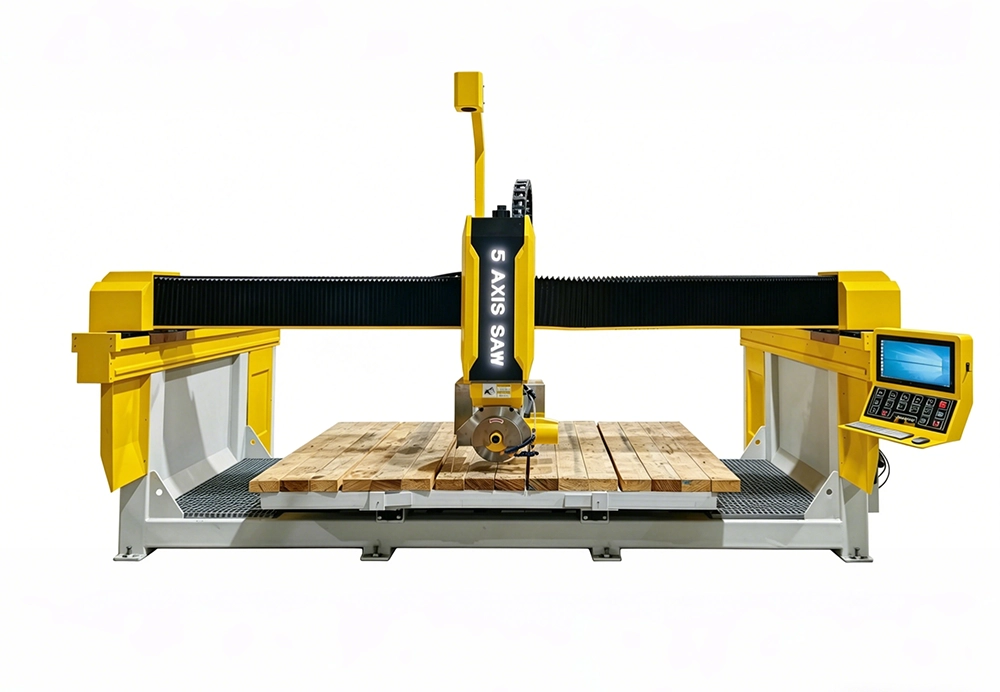
A 5-axis CNC bridge saw provides full interpolation movement between axes. The blade can move dynamically while tilting and rotating simultaneously.
This allows:
- Complex curved cutting
- 3D profiling
- Invisible joints
- High-end architectural components
- Complex stone furniture production
5 Axis CNC Bridge Saws target manufacturers producing luxury countertops, custom stone projects, and export-level fabrication.
4+1 Axis Bridge Saw Advantages
- Lower initial investment cost
- Faster ROI recovery (6-12 months)
- Ideal for standard countertop production
- Easy to operate and maintain
- Perfect for medium-scale stone factories
5 Axis Bridge Saw Advantages
- Handles complex custom projects
- Access to high-end/premium markets
- One-setup processing reduces labor
- Better material utilization for complex shapes
- Strategic market expansion capability
Stone Cutting Machine ROI: 4+1 Axis vs 5 Axis Comparison
ROI is not about which machine is “more advanced.” ROI is about which machine makes you more money relative to your production model.
Standard Countertops
Ideal for 4+1 Axis machines - efficient production with basic edge profiling
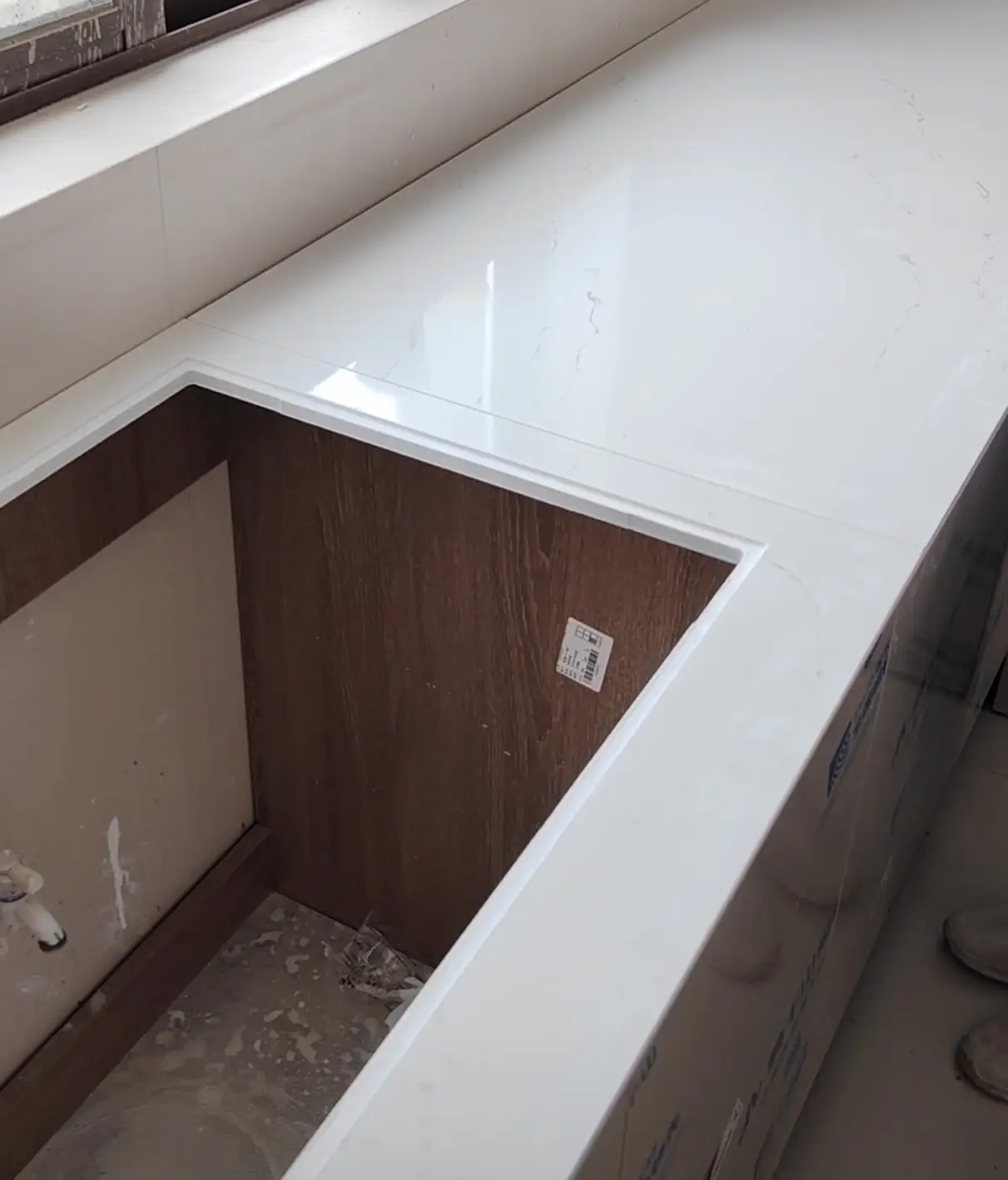
Custom Sink Integration
Perfect for 5 Axis machines - complex 3D shapes and seamless joints

Architectural Elements
Requires 5 Axis capability for intricate designs and precision
Let’s analyze key cost and revenue factors:
1. Initial Investment Cost
- 4+1 Axis Bridge Saw → Lower capital investment
- 5 Axis Bridge Saw → Higher upfront cost
If your primary production is standard countertops with occasional 45° cutting, the 4+1 axis offers faster cost recovery.
Typical ROI recovery period:
- 4+1 Axis: 6–12 months (depending on order volume)
- 5 Axis: 12–24 months (for mid-level factories)
For startups or factories upgrading from manual bridge saws, 4+1 axis is usually the safer financial entry point.
2. Production Flexibility & Market Range
Here’s where things get interesting. A 5-axis machine can accept higher-value custom orders that 4+1 cannot easily handle:
- Curved island countertops
- Integrated sink carving
- Artistic stone walls
- Complex bevel geometry
If your market serves high-end residential projects or overseas architectural clients, 5-axis opens premium pricing opportunities. In that case, higher investment may generate higher margin.
3. Labor Savings
Modern CNC systems reduce reliance on skilled manual operators. Both machines:
- Reduce layout errors
- Increase cutting precision
- Improve material utilization
However, a 5-axis machine can complete complex shapes in one setup, reducing secondary processing and labor steps. For factories struggling with skilled labor shortages, 5-axis may generate hidden ROI through labor optimization.
4. Material Utilization & Waste Reduction
Precision cutting affects profitability more than many owners realize. With intelligent nesting software:
- 4+1 Axis improves slab usage significantly compared to manual cutting
- 5 Axis further optimizes complex shape nesting
Over time, improved yield on expensive granite and sintered stone dramatically impacts margins, especially when processing premium materials.
5. Order Structure Determines ROI
Here is the core logic:
If your order structure is:
- 70–80% standard straight countertop cutting
- Limited custom geometry
→ 4+1 Axis provides better ROI.
If your order structure includes:
- High customization
- Export projects
- High-end villa or commercial stone work
→ 5 Axis generates higher long-term ROI, especially for premium granite cutting machine and marble cutting machine applications.
For sintered stone cutting machine operations, the right machine choice can significantly impact your bottom line. ROI depends on your product mix — not marketing claims.
CNC Bridge Saw ROI Comparison Table
| Factor | 4+1 Axis Bridge Saw | 5 Axis Bridge Saw |
|---|---|---|
| Initial Investment | Lower | Higher |
| ROI Recovery Period | 6-12 months | 12-24 months |
| Best For | Standard countertops, mid-scale factories | Custom projects, high-end markets |
| Labor Savings | Moderate | Significant (one-setup processing) |
| Material Utilization | Good (standard shapes) | Excellent (complex shapes) |
| Market Reach | Mainstream countertop market | Premium/custom stone market |
Still Comparing? Let Data Decide.
Take the guesswork out of your investment decision with our free resources:
Free ROI analysis • Free sample cutting video • Free factory capacity assessment
CNC Bridge Saw ROI Calculator
Note: 5-axis efficiency increase is a typical estimate, actual results should be based on your business data
4+1 Axis CNC Bridge Saw
5 Axis CNC Bridge Saw
CNC Bridge Saw Business Strategy for Stone Factories
A useful mental model:
- 4+1 Axis = Operational Efficiency Investment
- 5 Axis = Strategic Market Expansion Investment
If your goal is cost control and fast payback → 4+1 Axis
If your goal is brand upgrade and premium positioning → 5 Axis
Both can be profitable. The difference lies in business direction.
How to Improve CNC Bridge Saw ROI in Stone Factories
High Rigidity Structure
Built to withstand heavy stone fabrication workloads with minimal downtime
Stable CNC Control
Precision control systems ensure consistent cutting quality and reduce waste
Remote Technical Support
Minimize downtime with fast, expert technical assistance
Software Integration
Seamless integration with nesting software for maximum material utilization
Modern bridge saws are engineered specifically for stone fabrication factories that demand reliability and performance. The goal is not just acquiring equipment — it is ensuring faster payback and sustainable production growth.
Whether you choose 4+1 Axis or 5 Axis, machine stability directly determines real ROI. Downtime kills profit faster than price differences.
Why Choose Midecnc CNC Bridge Saw Equipment
10+ Years in Stone Machinery
Decades of experience in designing and manufacturing CNC stone cutting equipment
Exported to 100+ Countries
Proven track record of delivering quality machines worldwide
Remote Technical Support
24/7 technical assistance to minimize downtime
Spare Parts Supply System
Comprehensive spare parts inventory for quick replacements
Heavy-Duty Machine Structure
Built to withstand rigorous stone fabrication operations
Industry Certifications
CE Certification
Complies with European safety, health, and environmental protection standards
ISO Certification
ISO 9001:2015 certified for quality management systems
Export Experience
Extensive experience in exporting to global markets with proper documentation
Factory Production Video
Request a video tour of our production facility to see our manufacturing process
Why Some Stone Factories Fail to Achieve CNC Bridge Saw ROI
Understanding the common pitfalls can help you avoid costly mistakes when investing in CNC bridge saw equipment. Here are the key reasons why some stone factories fail to achieve the expected ROI:
Wrong Machine Selection
Choosing a machine that doesn't match your production needs is the most common mistake. For example, investing in a 5 Axis machine when your production is mostly standard countertops can lead to underutilization and longer payback periods.
Overestimating Demand
Many factories overestimate their future production volume when calculating ROI, leading to unrealistic payback period expectations. It's crucial to base calculations on actual historical data and conservative growth projections.
Poor Software Usage
Even the best CNC machine won't deliver optimal ROI if the operator doesn't fully utilize its software capabilities. Proper training on nesting software and machine programming is essential for maximizing efficiency.
Operator Training Issues
Inadequate operator training can lead to machine downtime, material waste, and suboptimal production speeds. Investing in comprehensive training is as important as investing in the machine itself.
By avoiding these common pitfalls and making an informed decision based on your specific production needs, you can maximize the ROI of your CNC bridge saw investment.
Final Verdict: Which CNC Bridge Saw Has Better ROI?
There is no universal winner.
For most medium-scale countertop factories:
→ 4+1 Axis Bridge Saw delivers faster and safer ROI.
For factories targeting premium architectural stone projects:
→ 5 Axis Bridge Saw unlocks higher revenue ceiling.
The smarter investment is not choosing the most expensive machine — it is choosing the machine aligned with your actual production structure.
And that alignment determines your ROI.
People Also Ask About CNC Bridge Saw ROI
The payback period for a CNC bridge saw depends on several factors, including the machine type, production volume, and profit margin per slab. For a 4+1 Axis machine, the payback period typically ranges from 6-12 months for medium-scale factories. For a 5 Axis machine, it may take 12-24 months, but the higher production capacity and ability to handle complex projects can lead to higher long-term returns.
A 5 Axis CNC is worth the investment if your production includes complex custom projects, high-end architectural components, or if you're targeting premium markets. The higher initial cost is offset by reduced labor costs, improved material utilization, and access to higher-margin projects. For factories processing primarily standard countertops, a 4+1 Axis machine may offer better ROI.
The main difference is in the number of axes and the complexity of movements. A 4 Axis CNC machine typically offers X, Y, Z linear movements plus C-axis rotation. A 4+1 Axis machine adds A-axis tilt up to 45°. A 5 Axis CNC machine provides full interpolation between all axes, allowing for complex curved cutting, 3D profiling, and more intricate designs without repositioning the material.
Profit per slab varies depending on the material, complexity of the project, and market conditions. On average, stone factories can make $50-$200 profit per slab for standard countertops. For custom projects with complex designs, profit margins can be significantly higher, ranging from $200-$500 per slab or more. Efficient production with CNC equipment can increase profit margins by reducing labor costs and material waste.
CNC Bridge Saw ROI: Frequently Asked Questions
Some 4+1 Axis CNC bridge saw for stone models offer upgrade paths to 5 Axis capabilities, allowing you to start with a lower investment and scale as your business grows. This is particularly important for stone factories considering their long-term stone factory investment cost. However, this depends on the specific model and your production needs. Contact the manufacturer's technical team for a customized upgrade assessment.
On average, 5 Axis machines reduce labor costs by 30-40% for complex projects by eliminating secondary processing steps. For factories processing 100+ slabs per month, this can translate to significant annual savings and faster ROI despite the higher initial investment.
Most CNC Bridge Saws come with intuitive nesting and cutting software optimized for stone fabrication. The software typically includes pre-programmed templates for standard countertops, sink holes, and common shapes, while also supporting custom design imports for high-end projects.
Modern 4+1 Axis and 5 Axis Bridge Saws are designed for low maintenance. Typical annual maintenance costs are 2-3% of the machine's purchase price, covering routine inspections, lubrication, and replacement of wear parts. Remote diagnostics help identify potential issues before they cause costly downtime.
Ready to Get Started?
Contact us today for a free consultation and customized ROI analysis for your stone fabrication business.
Contact Us