Introducción
Upgrading from manual stone processing to CNC automation is a significant investment for any stone fabrication business. Whether the goal is to increase countertop production, improve cutting accuracy, reduce labor costs, or expand into complex architectural projects, selecting the right equipment is only part of the process.
Many stone factories focus on machine specifications and purchase prices but overlook production planning, material handling, and operator training. These oversights can lead to underutilized equipment, unexpected operating costs, and a longer return on investment.
A successful CNC upgrade requires more than installing a new machine. It requires a clear understanding of existing production limitations, future processing requirements, and how automated equipment will integrate with the factory's workflow.
Below are five common mistakes stone factories make before investing in CNC automation—and how to avoid them.
01 / Equipment selection
Choosing a CNC Machine Based Only on Purchase Price
Why the Lowest Initial Cost Can Become Expensive
Machine price is an important consideration when upgrading a stone fabrication facility. However, choosing equipment solely based on the initial purchase cost can result in higher operating expenses and limited production capabilities.
Some factories select a CNC bridge saw or stone processing machine based on a low quotation without fully evaluating spindle performance, motion control, cutting capacity, software compatibility, and after-sales support.
A machine that appears affordable during procurement may not provide the productivity or processing flexibility required for long-term operations.
Key Technical Factors to Evaluate
- Cutting capacity: maximum workpiece dimensions and material thickness.
- Spindle configuration: motor power, spindle speed, and compatibility with required tools.
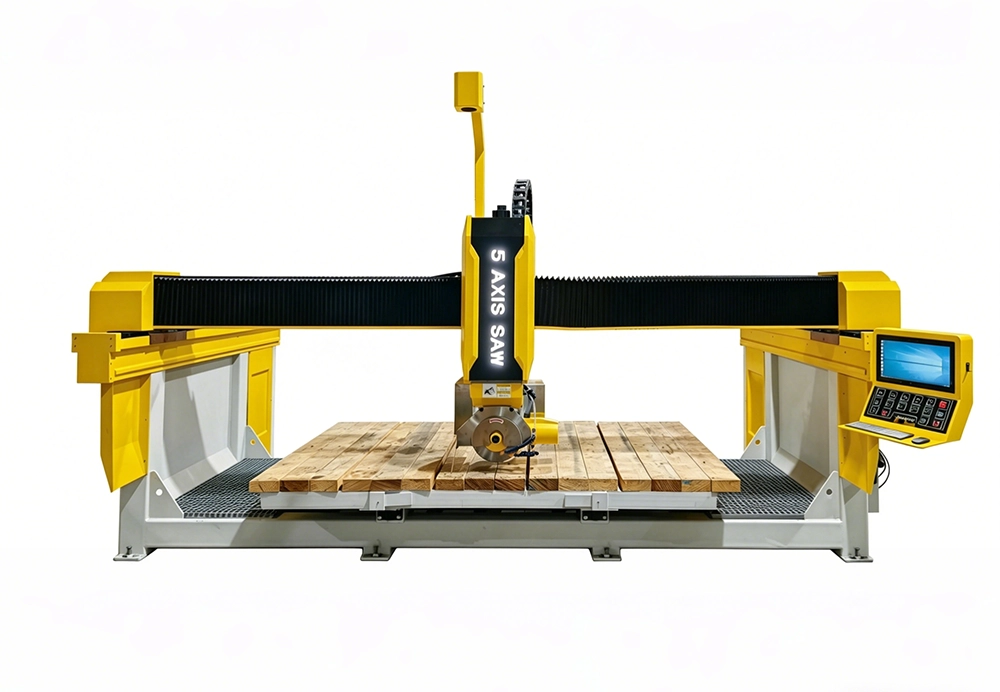
- Axis configuration: whether 4+1-axis or 5-axis interpolation is required.
- Positioning accuracy: machine positioning and repeatability specifications.
- Control system: CNC controller, software interface, and programming workflow.
- Tool compatibility: diamond blades, core drills, milling tools, and profiling tools.
- After-sales service: installation, operator training, spare parts, and technical support.
A 4+1 Axis CNC Bridge Saw may suit standard countertop fabrication, while a 5-axis system is better for complex contours, angled cuts, drilling, and three-dimensional machining.
How to Avoid This Mistake
Build a machine evaluation checklist before requesting quotations. Compare the complete operating requirements—including machine configuration, tooling, installation, training, maintenance, and expected production capacity.
The objective is to evaluate total operating value rather than purchase price alone.
02 / Workflow
Underestimating Material Handling and Factory Workflow
CNC Automation Does Not Eliminate Production Bottlenecks
Installing a CNC machine does not automatically optimize the entire stone fabrication process. A factory may invest in an advanced cutting system but continue using inefficient slab loading, manual positioning, material transfer, or finished-piece handling procedures.
Material handling is particularly important when processing large granite, marble, quartz, and sintered stone slabs.
Common Workflow Problems
- Insufficient space for slab loading and unloading.
- Poor positioning of raw slabs before cutting.
- Manual material transfer between cutting and polishing operations.
- Inadequate workpiece support.
- No defined workflow for finished components.
- Delays between cutting, edge processing, and inspection.
Prepare the installation area before the machine arrives. Confirm floor conditions, power supply, water management, material handling access, and operator working space.
A well-planned factory layout allows the CNC machine to operate as part of an efficient production system rather than as an isolated piece of equipment.
03 / Production fit
Selecting Machine Specifications Without Considering Actual Production Requirements
More Advanced Equipment Is Not Always Necessary
Some businesses select a machine based on maximum axis count, motor power, or advertised features without analyzing the types of stone products they manufacture. A machine designed for complex architectural components may offer capabilities that a standard countertop workshop rarely uses.
Match Machine Configuration to Processing Tasks
| Production requirement | Suitable equipment consideration |
|---|---|
| Standard straight cuts | CNC bridge saw |
| 45° miter cutting | Bridge saw with bevel-cutting capability |
| Sink and cooktop openings | CNC cutting and drilling functions |
| Complex angled cuts | 5-axis CNC bridge saw |
| Curved edge profiling | CNC machining and profiling equipment |
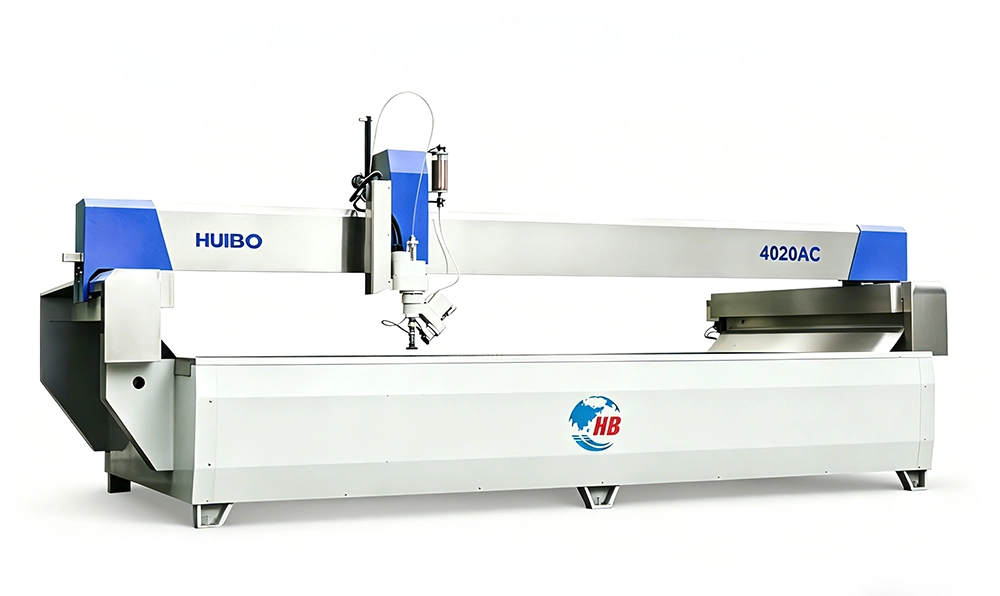
| Precision abrasive cutting | CNC waterjet |
| Combined cutting and waterjet processing | Composite waterjet and bridge saw system |
Review several months of production orders. Consider your product mix, materials, typical workpiece dimensions, required drilling or profiling, and expected capacity over the next three to five years.
A machine should be selected for the work it needs to perform—not simply for the features listed in its specification sheet.
04 / Digital production
Ignoring Software Compatibility and Digital Production Preparation
A CNC machine's performance is closely connected to its control system, programming software, and production data. Some stone factories focus heavily on mechanical specifications but underestimate CAD file preparation, toolpath generation, operator interfaces, and data transfer.
Common Software-Related Problems
- Incompatible CAD file formats.
- Incorrect drawing dimensions and missing cutting allowances.
- Improper toolpath settings.
- Inadequate operator training and manual data entry errors.
- Poor coordination between design and production teams.
Establish a Standardized Digital Workflow
Training should cover machine operation, programming, tool management, routine maintenance, and troubleshooting. Operators should also understand how cutting parameters influence edge quality.
Reliable automation begins with consistent digital preparation.
05 / Lifecycle planning
Failing to Plan for Maintenance, Training, and Long-Term Support
Machine Installation Is Only the Beginning
Stone processing equipment operates in a demanding environment involving abrasive dust, water, diamond tooling, and continuous mechanical movement. Proper maintenance is essential for maintaining machine performance.
Mechanical maintenance
Linear guideways and lubrication systems, ball screws and racks, machine alignment, and spindle condition.
Electrical & control
Servo motors and drive systems, the CNC controller and electrical cabinet, cable connections, sensors, and parameter backups.
Water & slurry management
Water circulation and slurry management keep equipment clean and protect downstream systems in wet processing.
Create a Maintenance Schedule
| Frecuencia | Typical inspection items |
|---|---|
| Diario | Machine cleaning, water system checks, tool condition |
| Semanal | Lubrication, worktable inspection, cable condition |
| Mensual | Mechanical components, sensors, alignment checks |
| Periodic | Comprehensive service per manufacturer recommendations |
Preventive maintenance helps protect equipment performance and supports consistent production over the machine's service life.
Readiness checklist
How to Prepare Your Stone Factory for CNC Automation
Avoiding these five mistakes requires a structured preparation process before placing an equipment order.
Analyze current production bottlenecks
Review the existing workflow and identify where production time is lost—manual cutting, repeated positioning, rework, or material handling.
Define technical requirements
Specify materials, slab dimensions, cutting thickness, required operations, accuracy, and production volume before requesting configurations.
Evaluate the total investment
Look beyond the machine price: tooling, installation, factory preparation, training, maintenance, software, and future expansion.
Plan operator training before commissioning
Identify the people responsible for operation, programming, and maintenance, and set training objectives before installation.
Select a supplier with relevant technical experience
Ask about similar applications, commissioning arrangements, warranty terms, spare parts, and technical support.
Conclusión
Build the right foundation before you automate.
Upgrading to CNC automation can help stone factories improve production consistency, expand processing capabilities, and reduce dependence on manual operations. However, the benefits depend on how well the equipment matches the factory's actual requirements.
Choosing equipment based only on purchase price.
Underestimating material handling and factory workflow.
Selecting specifications without evaluating production requirements.
Ignoring software compatibility and digital preparation.
Failing to plan for maintenance, training, and long-term support.
Explore CNC stone processing solutions
Make your next production decision with clarity.
Midecnc provides CNC bridge saws, waterjet machines, and stone machining systems for international fabrication businesses.
Contactar a Midecnc