Komplettanleitung zu CNC-Brückensägen für die Steinbearbeitung
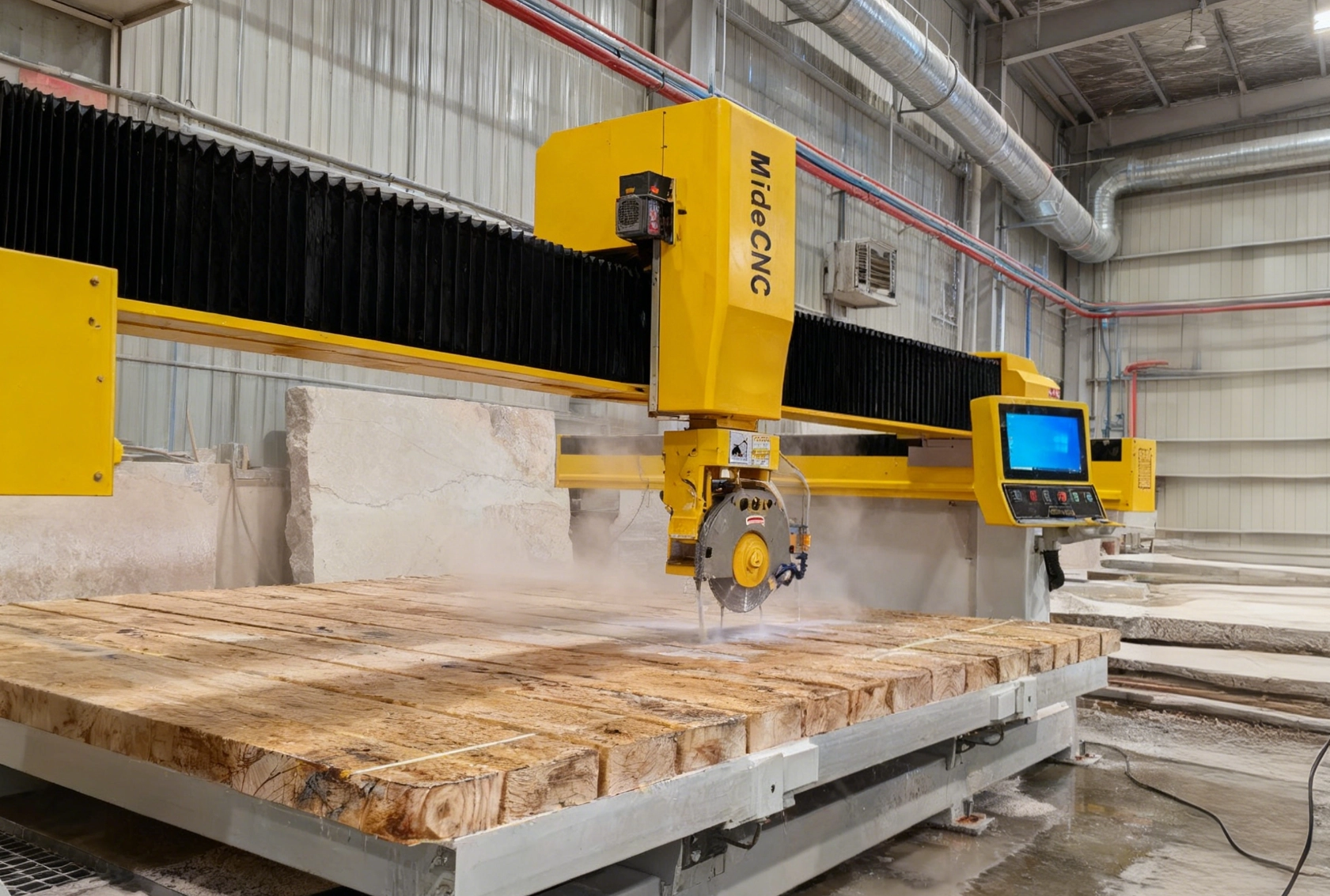
In der modernen Steinbearbeitung sind Präzision und Effizienz keine Option – sie bestimmen die Rentabilität. Ob eine Werkstatt Granitplatten für Küchenarbeitsplatten schneidet oder komplexe Marmorkomponenten für Gewerbegebäude produziert, die Wahl der Schneidausrüstung beeinflusst direkt Qualität, Output und Kostenkontrolle.
Dieser vollständige Leitfaden zu CNC-Brückensägen für die Steinbearbeitung richtet sich an Eigentümer von Steinbetrieben, Produktionsleiter und Projektentscheider. Er erklärt, was CNC-Brückensägen sind, wie sie funktionieren, die verschiedenen Achskonfigurationen, ihre Einsatzbereiche und wie man die richtige Maschine für reale Produktionsanforderungen auswählt — nicht nur die Spezifikationen auf dem Papier.
Was ist eine CNC-Brückensäge?
Eine CNC-Brückensäge ist eine computer-gesteuerte Steinbearbeitungsmaschine, die speziell für die Verarbeitung harter Materialien wie Granit, Marmor, Quarz und Kunststein entwickelt wurde. CNC (Computer Numerical Control) bedeutet, dass der Schneidprozess durch programmierte Anweisungen und nicht manuell gesteuert wird — menschliche Fehler werden eliminiert und gleichbleibende Ergebnisse sichergestellt.
Der Begriff „Brückensäge“ stammt von ihrer starren Brückenstruktur, die den Schneidetisch überspannt. Der Schneidkopf bewegt sich präzise entlang dieser Brücke und gewährleistet stabile Bewegung, hohe Genauigkeit und gleichbleibende Schnittergebnisse — selbst bei großen oder schweren Steinplatten (bis zu 3000×1600 mm).
In der Steinbearbeitung sind CNC-Brückensägen das Rückgrat moderner Werkstätten, da sie Schneidgenauigkeit, Automatisierung und Produktionseffizienz in einer Maschine vereinen. Laut dem Stone Fabrication Industry Report 2024 ist die Einführung von CNC-Brückensägen in den letzten drei Jahren um 45 % gestiegen, bedingt durch steigende Arbeitskosten und die Nachfrage nach höherer Präzision.

Funktionsweise von CNC-Brückensägen
Im Kern jeder CNC-Brückensäge befindet sich ein Hochgeschwindigkeits-Diamantblatt (Durchmesser 300–600 mm), das dichte Steinmaterialien mit minimalem Absplittern schneiden kann. Der Schneidkopf bewegt sich typischerweise entlang der drei Hauptachsen:
- X-axis: von links nach rechts (Verfahrbereich bis zu 3200 mm)
- Y-axis: vorwärts und rückwärts (Verfahrbereich bis zu 1800 mm)
- Z-axis: auf und ab (Schnitttiefe bis zu 200 mm)
Fortgeschrittene Konfigurationen wie 4+1-Achsen- und 5-Achsen-CNC-Brückensägen fügen Rotations- (A-Achse) und Kippbewegungen (C-Achse) hinzu. Diese zusätzlichen Achsen ermöglichen es dem Blatt, Schrägen, Gehrungen, Kurven und komplexe 3D-Formen in einer einzigen Einrichtung zu schneiden — ein entscheidender Vorteil für architektonische und individuelle Steinbearbeitung.
Ein typischer Arbeitsablauf einer CNC-Brückensäge umfasst:
- Importieren von CAD/CAM-Zeichnungen oder direkte Programmierung der Schnittwege am Bedienfeld (kompatibel mit AutoCAD, SolidWorks)
- Fixieren der Steinplatte auf dem Vakuumtisch, um Bewegungen während des Schneidens zu verhindern
- Automatische Ausführung der Schneidvorgänge gemäß den programmierten Parametern (Geschwindigkeit: 0–60 m/min)
- Einsatz von Wasserkühlsystemen (Durchfluss: 50 L/min), um die Blatttemperatur zu senken, Staub zu unterdrücken und die Oberflächenqualität zu verbessern
Dieser automatisierte Prozess verbessert die Schnittkonsistenz erheblich und verringert gleichzeitig die Abhängigkeit von qualifizierter Handarbeit — ein einzelner Bediener kann 2–3 Maschinen gleichzeitig steuern.
Wer sollte CNC-Brückensägen verwenden?
CNC-Brückensägen sind nicht auf eine Art von Steinbetrieb beschränkt. Sie werden in mehreren Segmenten der Steinindustrie weit verbreitet eingesetzt:
- Steinbearbeitungsbetriebe, die Platten, Fliesen und kundenspezifische Komponenten herstellen (Granit, Marmor, Quarz)
- Küchenarbeitsplatten-Werkstätten, die Ausschnitte für Spülen, Kantenprofilierungen und abgeschrägte Verbindungen benötigen
- Gewerbliche Bauprojekte wie Hotels, Einkaufszentren und Bürogebäude
- Anbieter von Architekturstählen, die gebogene, abgeschrägte oder komplexe dekorative Elemente herstellen
Jeder Betrieb, der Wert auf Präzision, Wiederholbarkeit und skalierbare Produktion legt, profitiert von der CNC-Brückensägentechnologie. Zu unseren Kunden gehören die Top-10-Steinbearbeitungsbetriebe in Europa und Nordamerika, die Midecnc-Maschinen einsetzen.
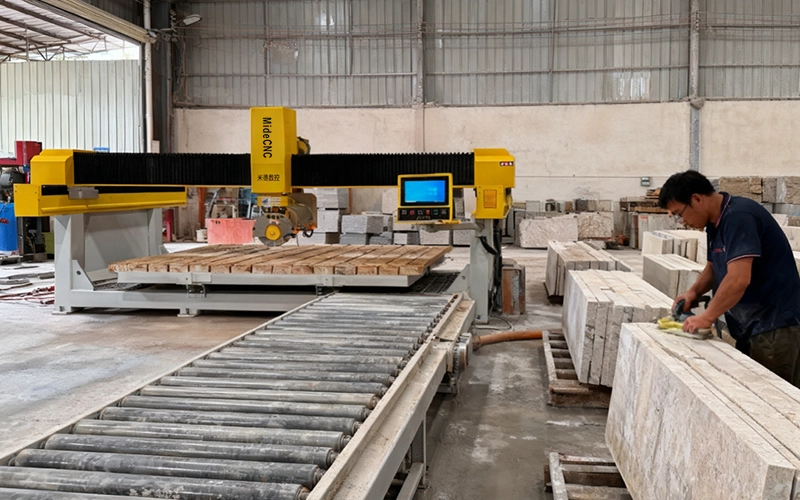
Hauptvorteile von CNC-Brückensägen in der Steinbearbeitung
Gleichbleibende Schnittgenauigkeit
Die CNC-Steuerung stellt sicher, dass jeder Schnitt dem exakt programmierten Pfad folgt (Genauigkeit ±0,1 mm bei 5-Achsen-Modellen). Dieses Maß an Wiederholbarkeit ist entscheidend für Projekte mit engen Toleranzen oder standardisierten Produktionsanforderungen — Reduzierung von Nacharbeit von 8 % auf unter 1 %.
Höhere Produktionseffizienz
Automatisierte Schnittpfade reduzieren Leerlaufzeiten und verkürzen die Produktionszyklen im Vergleich zum manuellen Sägen um 30-50 %, sodass Fabriken größere Auftragsvolumen bewältigen können, ohne die Arbeitskosten zu erhöhen.
Reduzierter Materialverlust
Präzise Positionierung und optimierte Nesting-Software helfen, Verschnitt um 15-20 % zu reduzieren — eine erhebliche Kosteneinsparung bei der Bearbeitung teurer Steinmaterialien (Granit kostet $50-$150 pro Quadratfuß).
Höhere Bearbeitungsflexibilität
Fortschrittliche Achskonfigurationen ermöglichen es einer einzelnen CNC-Brückensäge, gerade Schnitte, Fasen (0–90°), Gehrungen, Kantenbearbeitung und komplexe 3D-Konturen ohne mehrere Maschinen auszuführen — wodurch die Investitionskosten um 40 % reduziert werden.
Arten von CNC-Brückensägen erklärt
Das Verständnis der Achskonfigurationen ist entscheidend bei der Auswahl der richtigen CNC-Brückensäge. Nachfolgend finden Sie einen detaillierten Vergleich der gängigsten Konfigurationen:
| Merkmal / Funktion | 3-Axis | 4+1 Axis | 5 Axis |
|---|---|---|---|
| Schnittgenauigkeit | ±0.5mm | ±0.2mm | ±0.1mm |
| Maximaler Fasenwinkel | 0° | 45° | 90° |
| Typischer ROI | 12-18 months | 10-15 months | 8-12 months |
| Preisspanne | $7,000-$10,000 | $15,000-$25,000 | $30,000-$50,000 |
| Am besten für | Basisplattenzuschnitt | Arbeitsplatten, architektonische Arbeiten | Komplexe 3D-Komponenten |
3-Achsen-CNC-Brückensäge
Eine Standard-3-Achsen-Maschine bewältigt gerade Schnitte und grundlegendes Profilieren effizient. Sie eignet sich für kleine Werkstätten mit einfachen Plattenzuschnittanforderungen (z. B. Fliesenproduktion) und begrenztem Budget.
4+1-Achsen CNC-Brückensäge
Die 4+1-Achsen-Konfiguration fügt eine Rotations- (A-Achse) oder Kippfunktion hinzu, die Winkelschnitte und fortschrittliche Kantenbearbeitung ermöglicht. Für viele Steinbetriebe stellt dies die ideale Balance zwischen Vielseitigkeit, Produktivität und Investitionskosten dar — insbesondere für Arbeitsplatten- und Architekturanwendungen (unser meistverkauftes Modell bei Midecnc).
5-Achsen CNC-Brückensäge
Eine 5-Achsen-CNC-Brückensäge bietet vollständige multidirektionale Bewegung (X/Y/Z/A/C-Achsen), sodass das Blatt frei neigen und drehen kann. Diese Konfiguration ist für Unterkanten, gebogene Profile und komplexe 3D-Steinkomponenten unerlässlich. Für High-End-Fertigung und anspruchsvolle Projekte wird ein 5-Achsen-System oft unverzichtbar und nicht optional.

Bei Midecnc sind sowohl 4+1-Achsen- als auch 5-Achsen-CNC-Brückensägen so konstruiert, dass sie den realen Anforderungen der Steinbearbeitung gerecht werden — von Schwerlastproduktion (8 Stunden Dauerbetrieb) bis zu filigranen Sonderanfertigungen. Alle unsere Maschinen kommen mit 2 Jahren Garantie und lebenslangem technischen Support.
Schlüsselfunktionen, auf die man bei einer CNC-Brückensäge achten sollte
Bei der Bewertung von CNC-Brückensägen sollten Sie sich auf Faktoren konzentrieren, die die langfristige Leistung und die Gesamtbetriebskosten direkt beeinflussen:
- Maschinenrahmensteifigkeit (geschweißte Stahlkonstruktion), um Vibrationen zu reduzieren und die Schneidstabilität zu verbessern
- Zuverlässige CNC-Steuerungssysteme (Siemens/FANUC), kompatibel mit gängiger CAD/CAM-Software
- Hochdrehmomentspindeln (15-22 kW) und hochwertige Diamantblätter für effizientes Steinschneiden
- Effektive Wasser- und Staubmanagementsysteme (Durchfluss 50L/min) zum Schutz von Werkzeugen und Bedienern
- Automatisierungsoptionen (automatische Werkzeugwechsler, Vakuumtische) für höheren Durchsatz
- Energieeffizienz (380V/50Hz, Leistungsaufnahme 15-30 kW) zur Senkung der Betriebskosten
Diese Elemente bestimmen nicht nur die Schnittqualität, sondern auch die Lebensdauer der Maschine (10–15 Jahre bei gut gewarteten Maschinen) und die Wartungskosten (typischerweise 5–8 % des Kaufpreises pro Jahr).
Kosten vs. Wert: Den tatsächlichen ROI verstehen
Eine CNC-Brückensäge ist eine bedeutende Investition, doch ihr Wert sollte nicht nur am anfänglichen Kaufpreis gemessen werden. Der wahre ROI ergibt sich aus betrieblicher Effizienz und Umsatzwachstum.
Fabriken erzielen in der Regel Renditen durch:
- Reduzierter Personalbedarf (1 Bediener für 2–3 Maschinen gegenüber 1 Bediener pro manueller Säge)
- Schnellere Produktionszyklen (30-50 % höhere Produktionsmenge)
- Geringerer Materialverlust (15-20 % weniger Verschnitt)
- Verbesserte Konsistenz und weniger Nacharbeit (von 8 % auf <1%)
- Fähigkeit, hochwertige komplexe Projekte zu übernehmen (höhere Preise für kundenspezifische Arbeiten)
Case Study: A US-based stone fabrication shop purchased a Midecnc 4+1 axis CNC bridge saw for $21,000. They saw a 40% increase in monthly output, reduced labor costs by $3,000/month, and cut material waste by $1,500/month — achieving full ROI in just 12 months.
Über Jahre hinweg betrachtet liefert die richtige CNC-Brückensäge oft eine starke Rendite, indem sie die gesamte Produktionseffizienz und Wettbewerbsfähigkeit verbessert.
So wählen Sie die richtige CNC-Brückensäge für Ihre Werkstatt aus
Die Auswahl der richtigen Maschine beginnt damit, Ihre Produktionsanforderungen und langfristigen Geschäftsziele zu verstehen:
- Welche Steinmaterialien (Granit/Marmor/Quarz) und Dicken (10–100 mm) verarbeiten Sie am häufigsten?
- Benötigen Ihre Projekte Winkelschnitte, Kurven oder komplexe 3D-Formen (oder nur gerade Schnitte)?
- Welches Produktionsvolumen (sq. ft./Monat) und Automatisierungsgrad benötigen Sie?
- Wie hoch ist Ihr Budget (Anfangsinvestition + laufende Wartungskosten)?
- Benötigen Sie für Exportprojekte CE-/ISO-Zertifizierung?
Für Werkstätten, die Flexibilität ohne übermäßige Kosten suchen, ist eine 4+1 Achsen CNC-Brückensäge oft die praktischste Lösung. Für Fabriken, die komplexe architektonische Elemente oder Premium-Projekte (z. B. Luxus-Hotelinterieurs) bearbeiten, bietet eine 5-Achsen CNC-Brückensäge unvergleichliche Bearbeitungsmöglichkeiten.
Installation, Schulung und langfristiger Support
Eine CNC-Brückensäge ist nur so effektiv wie das Team, das sie bedient. Professionelle Installation, Bedienerschulung und kontinuierlicher technischer Support sind entscheidend, um gleichbleibende Leistung und langfristige Zuverlässigkeit sicherzustellen.
Midecnc supports customers throughout the entire lifecycle of their CNC stone cutting machines:
- Professionelle Vor-Ort-Installation (2–3 Tage) durch zertifizierte Techniker
- Bedienerschulung (40 Stunden) für Basis- und Fortgeschrittenenoperationen
- 24/7 technischer Support per Telefon/E-Mail/Fernzugriff
- Ersatzteilverfügbarkeit (95% der Teile auf Lager für Lieferung am nächsten Tag)
- Präventive Wartungsprogramme zur Verlängerung der Maschinenlebensdauer
Häufig gestellte Fragen (FAQs)
Fazit
CNC-Brückensägen sind in der modernen Steinbearbeitung unverzichtbar geworden. Sie vereinen Präzision, Effizienz und Vielseitigkeit und ermöglichen Steinwerkstätten, steigende Qualitätsanforderungen zu erfüllen und gleichzeitig die Produktionskosten zu kontrollieren.
Indem Steinbearbeiter verstehen, wie CNC-Brückensägen funktionieren, wie unterschiedliche Achskonfigurationen die Produktion beeinflussen und welche Funktionen wirklich zählen, können sie fundierte Entscheidungen treffen, die ihre Wettbewerbsfähigkeit stärken.
For workshops and factories seeking reliable, high-performance CNC solutions, Midecnc’s 4+1 axis and 5 axis CNC bridge saws provide the cutting accuracy and production efficiency required in today’s stone fabrication industry.
Benötigen Sie eine maßgeschneiderte CNC-Brückensäge-Lösung?
Unsere Experten werden Ihre Produktionsanforderungen kostenlos bewerten und die passende Maschine für Ihre Werkstatt, Ihr Budget und Ihre langfristigen Ziele empfehlen.
Kontaktieren Sie unser Team →